Amazon.com, Inc. (Nasdaq:
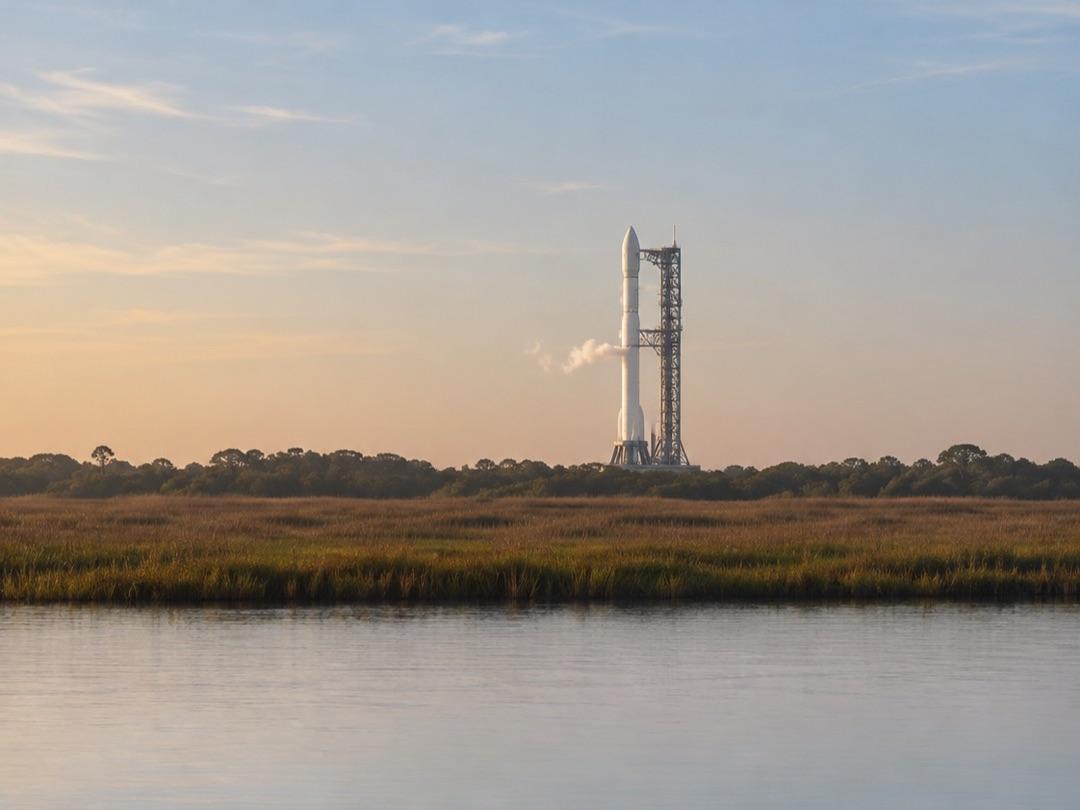
AMZN) said its satellite internet network, Amazon Leo, is targeting its first launch on United Launch Alliance's (ULA) Vulcan rocket on Friday, November 13, 2026. The mission is scheduled to lift off from Space Launch Complex 41 at Cape Canaveral Space Force Station in Florida, subject to range approval.
The mission
According to Amazon:
- the mission is called Leo Vulcan 1 (LV-01) and is Amazon Leo's first launch on Vulcan
- it is set to carry 40 satellites, the largest Amazon Leo payload delivered to date
- it will be the first Vulcan flight with six side boosters, and it uses a shorter, optimised Centaur V upper stage
- a second Vulcan mission, LV-02, is being prepared and is expected to launch within weeks of a nominal first mission
ULA is a joint venture of Boeing and Lockheed Martin. Launch dates can move because of weather, technical checks or range availability.
Why Vulcan matters for Amazon Leo
Amazon has 38 launches on contract with ULA. Together, these missions are planned to carry more than 1,500 first-generation Amazon Leo satellites. Melissa Wuerl, director of launch systems for Amazon Leo, said Vulcan will launch close to half of the first-generation constellation. Amazon funded a new integration facility at Cape Canaveral and a new mobile launch platform, which allow ULA to prepare two Vulcan missions at the same time.
Other launch partners
Amazon also uses Arianespace, Blue Origin and SpaceX to launch its satellites. Its next Arianespace mission, Leo Europe 4 (LE-04), is targeted for no earlier than November 23 from Kourou, French Guiana. Amazon said it has more than 100 missions on its launch manifest.
What Amazon Leo is
Amazon Leo, previously known as Project Kuiper, is a network of satellites in low Earth orbit designed to provide internet access to homes, businesses and governments, including in places that are hard to reach with cables. Satellites in low Earth orbit fly much closer to the ground than traditional communications satellites, which can reduce the delay in sending and receiving data. A large number of satellites is needed so that customers stay connected as individual satellites move across the sky. Amazon said it completed its 1,000th satellite in early September 2026 and has hundreds of satellites ready for launch.
Customers and service plans
Amazon expects an initial service rollout later in 2026. Over the past months, the company has announced an agreement with a large internet provider in South Africa, as well as plans for satellite internet in Uzbekistan and for direct-to-device mobile connectivity. Amazon Leo competes with other satellite internet services, including SpaceX's Starlink.
How Amazon Leo fits into Amazon
Amazon runs online stores, the Amazon Web Services (AWS) cloud business, advertising, subscription services such as Prime, and devices such as Echo and Kindle. Amazon Leo is a newer business that requires large investments in satellites, launches and ground equipment before it generates revenue.
What to watch
Key items include whether LV-01 launches as planned and the satellites reach orbit, the timing of the second Vulcan mission and the Arianespace mission later in November, the pace of future launches and the start of commercial service.
Risks and uncertainties
Rocket launches can be delayed, and a launch failure can lead to the loss of satellites and longer pauses between missions. Building a satellite network requires significant spending, and the timing of service and customer demand are uncertain. Amazon Leo also faces competition from established satellite internet providers.
What this means for investors
For Investing.one users following Amazon, the start of Vulcan launches and the planned service rollout may be relevant. The information above is based on announcements by Amazon and ULA.
Sources
This is not investment advice. Your capital is at risk.